
Connected TV Advertising Platform 101: A Beginner's Guide to Buying Streaming TV Ads
Connected TV Advertising Platform 101: A Beginner's Guide to Buying Streaming TV Ads
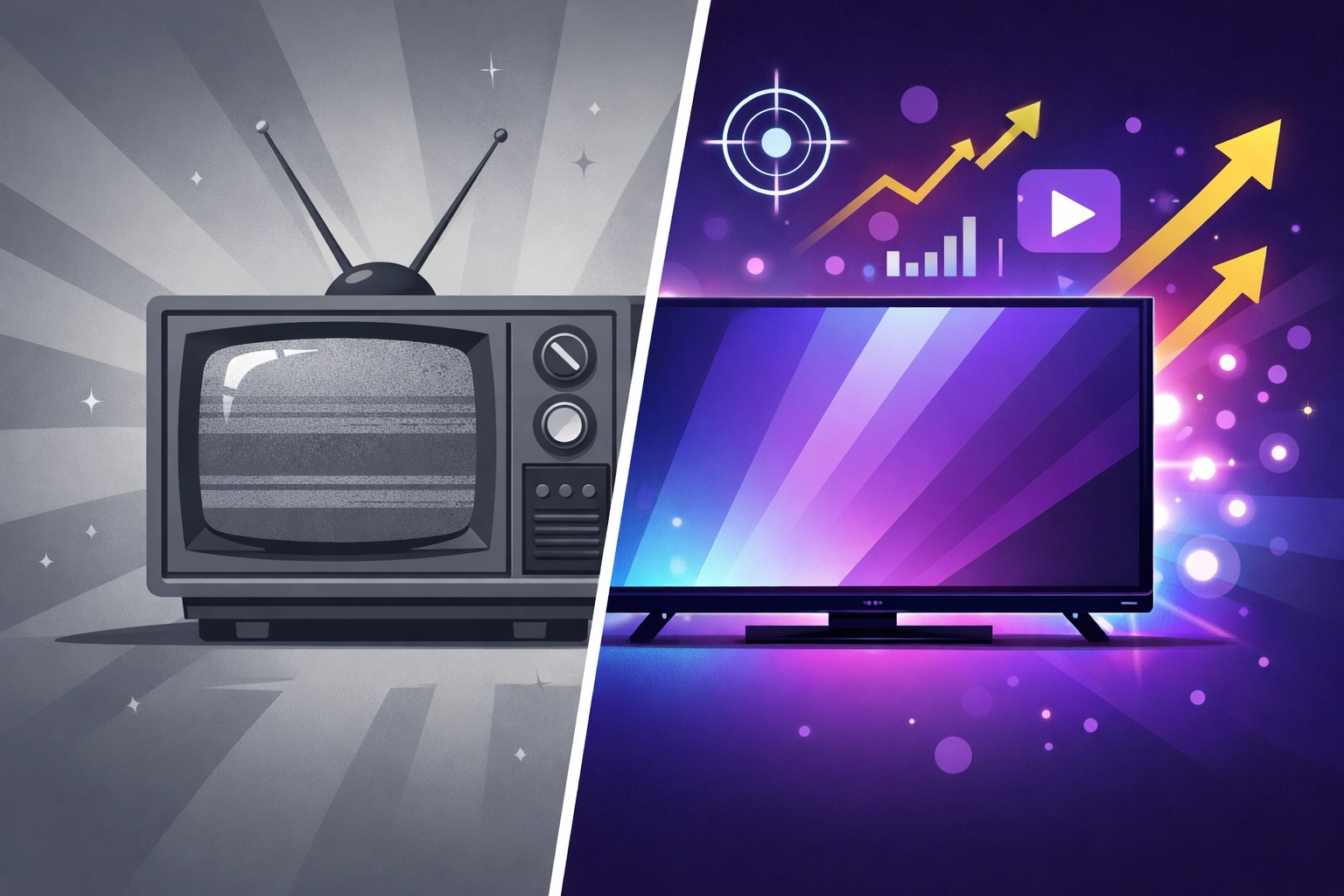
![[HERO] Connected TV Advertising Platform 101: A Beginner's Guide to Buying Streaming TV Ads](https://cdn.marblism.com/j6_Wx9r7MGZ.webp)
Remember when "watching TV" meant sitting on the couch at 8 PM sharp to catch your favorite show? Yeah, those days are gone.
Today, TV happens on demand. People stream what they want, when they want, on whatever screen is closest. And if you're still buying ads the old-fashioned way: calling up networks, negotiating insertion orders, and hoping your commercial hits the right eyeballs: you're about to get left behind.
Welcome to Connected TV advertising. It's the future of video ads, and you don't need a million-dollar budget or a media buying degree to get started.
Let's break it down.
What is Connected TV (CTV)?
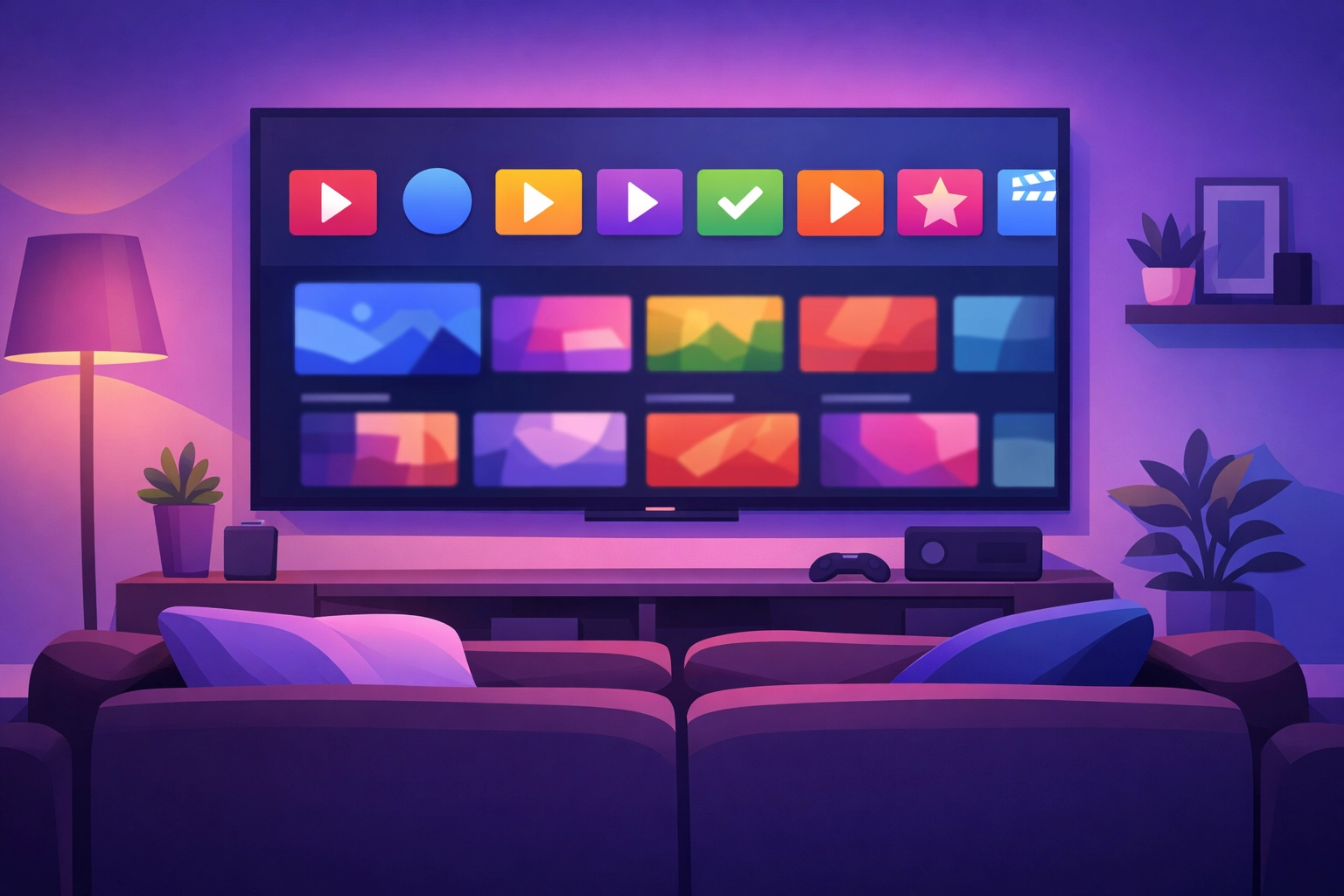
Connected TV is exactly what it sounds like: any television that connects to the internet.
That includes:
- Smart TVs (Samsung, LG, Vizio, etc.)
- Streaming devices (Roku, Apple TV, Amazon Fire Stick)
- Gaming consoles (PlayStation, Xbox)
- Any TV hooked up to a streaming app
If someone's watching Netflix, Hulu, Peacock, or YouTube on their TV screen, that's CTV. And that's where your ads need to be.
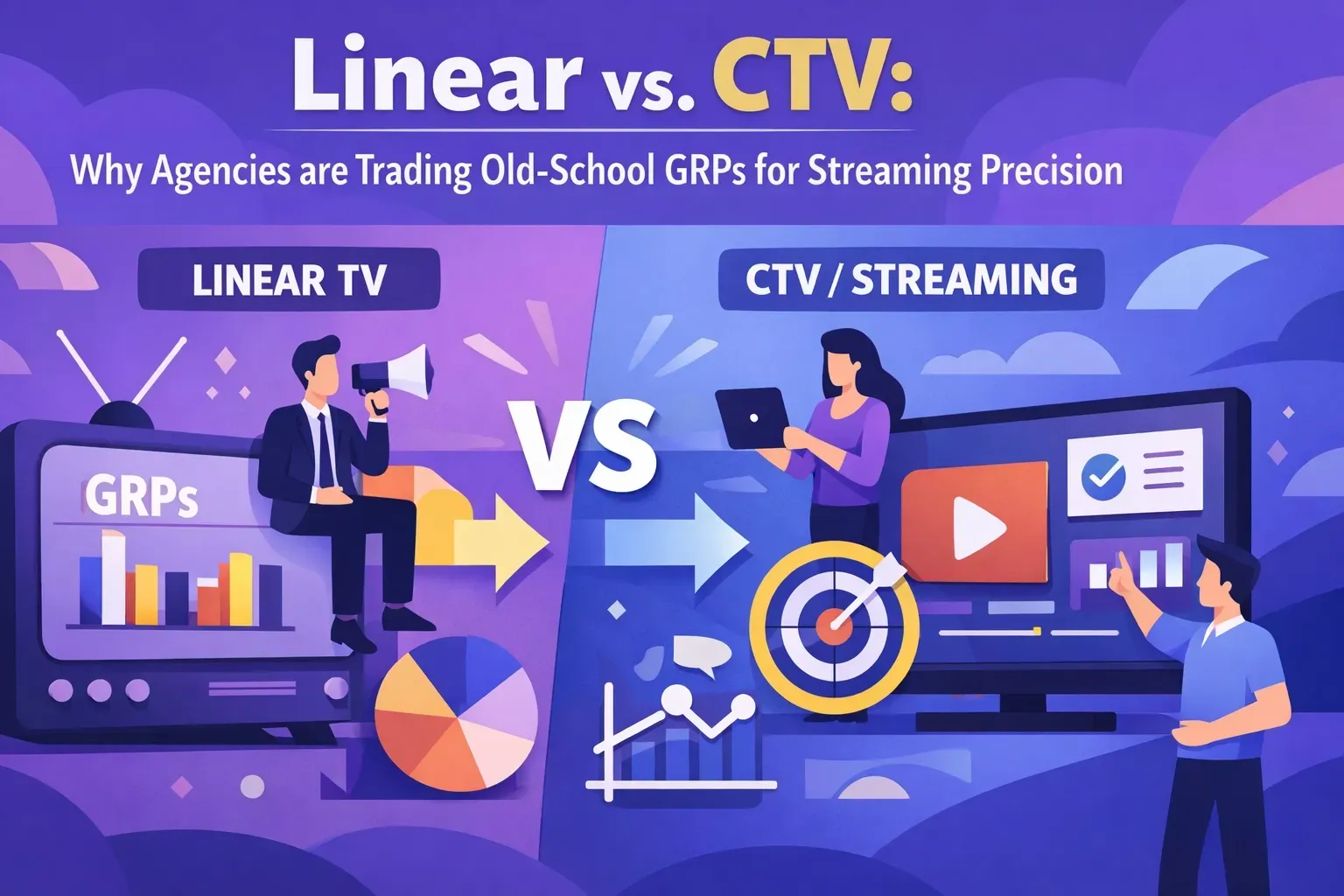
Here's the thing: unlike traditional broadcast TV that sends the same commercial to everyone watching a channel, CTV lets you serve different ads to different people watching the same show. One household sees your mattress ad. Another sees your car dealership promo. All based on who they are, where they live, and what they're interested in.
That's the power of programmatic advertising on the big screen.
What's a CTV Advertising Platform?
A CTV advertising platform is your control center. It's the tech that lets you buy, manage, and measure your streaming TV campaigns without calling a single TV network or signing a six-month contract.
Think of it like this: Instead of negotiating with Hulu, Peacock, and Roku individually (good luck with that), you work with a platform: a demand-side platform (DSP) like Conquest DSP: that gives you access to all of them at once.
No middlemen. No agencies taking 20% off the top. No minimum spend requirements that shut out small businesses.
You set your budget. You pick your audience. You upload your video. The platform does the rest.
How Does CTV Advertising Actually Work?
Let's walk through it step by step. Don't worry: it's easier than you think.
Step 1: Build Your Audience
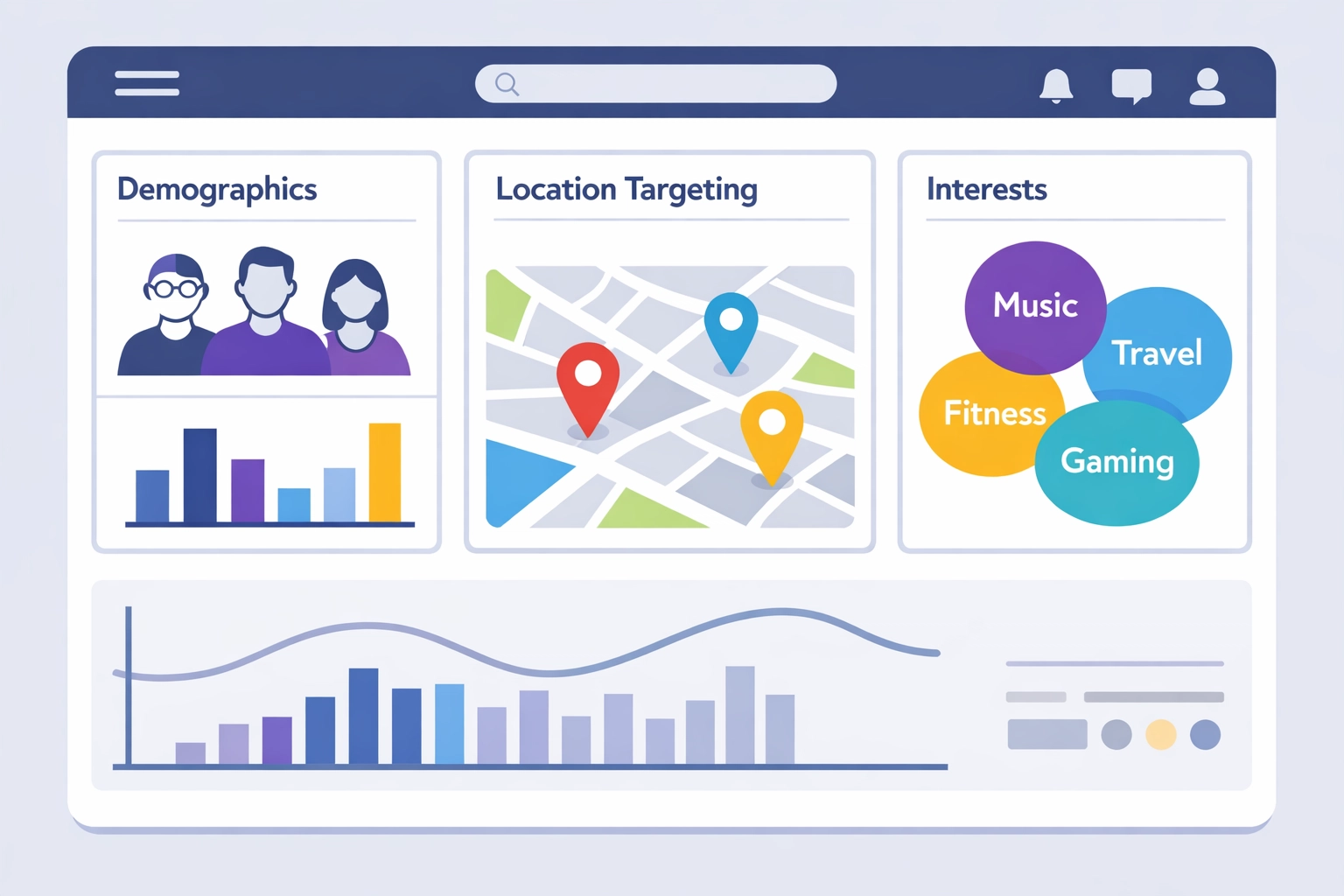
You start by defining who you want to reach. CTV platforms let you target based on:
- Demographics(age, income, household size)
- Behaviors(frequent travelers, car shoppers, fitness enthusiasts)
- Location(down to the ZIP code or even specific neighborhoods)
- Interests(sports fans, foodies, tech lovers)
You can even upload your own customer list and serve ads directly to people who already know your brand. That's called first-party data targeting, and it's gold.
Step 2: Set Your Budget and Goal
You tell the platform what you want to achieve. Are you driving website visits? Store foot traffic? Brand awareness?
Input your budget: you can start with as little as a few hundred bucks: and the platform's AI optimization engine goes to work. It automatically bids on ad inventory in real-time, securing the best placements for your money.
No upfront commitments. No contracts. Just results.
Step 3: Upload Your Creative
Got a 15 or 30-second video? Great. Upload it. Make sure your audio is crisp (48 kHz sample rate if you want to get technical) and your message is clear.
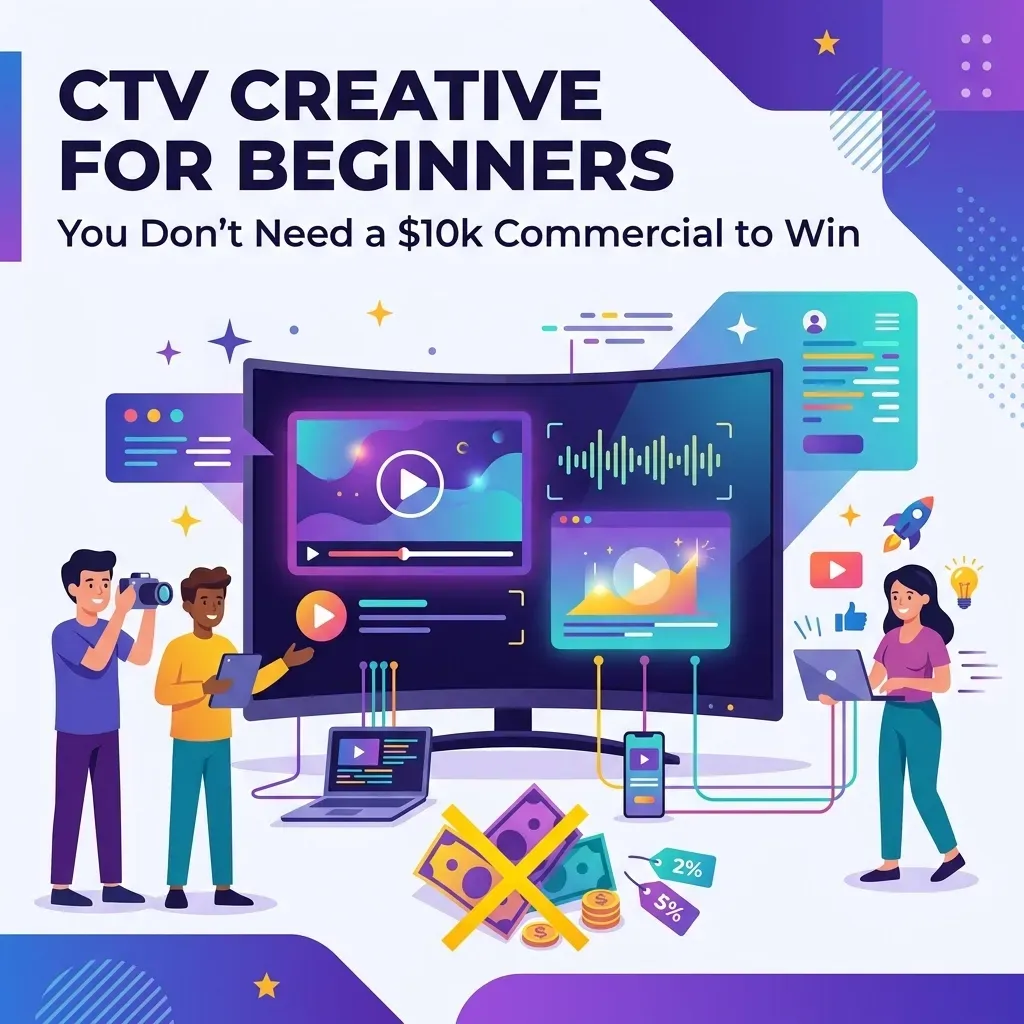
Don't have a video yet? We have an award-winning creative team ready to assist. Or, just about any modern iPhone can shoot in 4K these days. Your ad doesn't need a Hollywood budget. It just needs to be relevant and engaging.
Step 4: Launch and Optimize
Hit the launch button. Your ads start running across premium streaming apps: Hulu, Peacock, Paramount+, you name it.
Here's where it gets cool: The platform optimizes in real-time. If your ad performs better on Roku than on Fire TV, it shifts budget automatically. If a certain audience segment converts like crazy, it doubles down.
You're not guessing. You're not waiting weeks for a Nielsen report. You see performance data immediately and adjust on the fly.
Why CTV Advertising Beats Traditional TV (And It's Not Even Close)
Let's be honest: Traditional TV advertising is broken.
You're paying for impressions you can't verify, reaching people who aren't your customers, and waiting months to see if it worked. Plus, you need a massive budget just to get in the door.
CTV flips the script.
Precision Targeting
84% of marketers say CTV delivers better audience targeting than linear TV. That's because you're not buying a time slot and hoping your customer is watching. You're buying access to specific people based on real data.
Want to reach homeowners in Dallas earning over $100K who recently searched for patio furniture? Done. That level of precision is impossible on broadcast TV.
Hyper-Local Reach
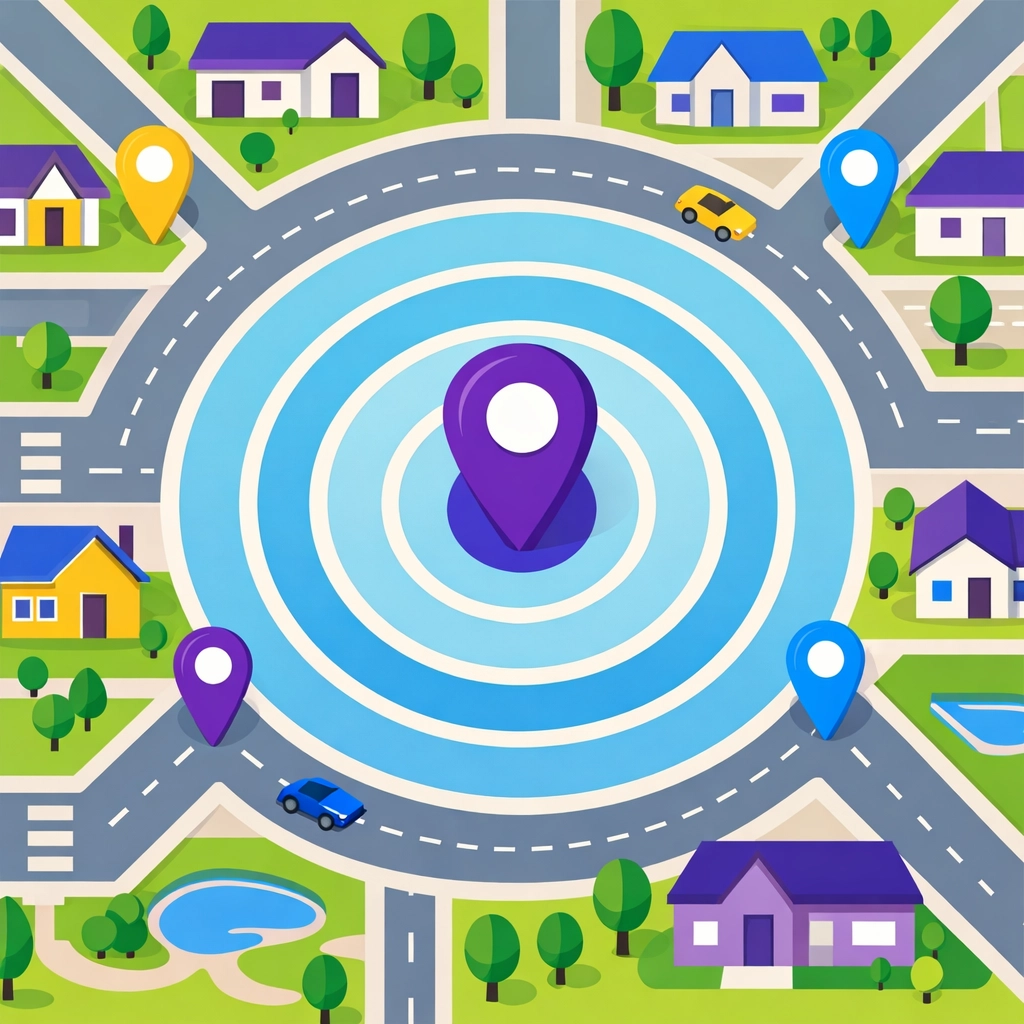
CTV uses IP-based targeting, which means you can serve ads to specific geographic areas based on device location. 80% of U.S. CTV inventory is addressable for hyper-local campaigns.
Running a local restaurant? Target people within five miles. Opening a new retail location? Geo-fence the surrounding area. You're not wasting budget on viewers three states away who will never walk through your door.
Real Measurement (Finally)
When someone watches your ad on CTV, the data logs instantly. You can track:
- Impressions and completion rates(how many people watched your full ad)
- Website visits triggered by your ad (i using a specific link or QR code)
- Store visits using footfall attribution technology
- Conversions tied directly to ad exposure
You're not flying blind. You're making data-driven decisions.
Lower Barriers to Entry
Traditional TV advertising required massive budgets, long-term contracts, and agency partnerships. CTV platforms like Conquest DSP remove those barriers.
No minimums. No commitments. No gatekeepers.
You can start small, test what works, and scale when you're ready. That's a game-changer for small businesses, boutique agencies, and brands that don't have millions to blow on a Super Bowl spot.
Key Metrics You Need to Track
Don't get lost in vanity metrics. Focus on what matters:
CPM (Cost Per 1,000 Impressions): Shows how efficiently you're reaching your desired audience for the price. Lower is better.
Cross-Screen Measurement: Tracks video performance across devices (mobile, desktop, CTV) so you understand the full customer journey.
Completion Rate: The percentage of viewers who watched your entire ad. This tells you if your creative is engaging or if people are tuning out.
Ready to Launch Your First CTV Campaign?
Here's the truth: CTV advertising isn't the future. It's the present. And if you're not running streaming TV ads, your competitors are.
The good news? You don't need a massive budget, a media buying team, or insider connections to get started.
Platforms like Conquest DSP make it simple: Build your audience. Set your budget. Upload your video. Launch.
No contracts. No middlemen. No BS.
Want to see how it works? Sign up here and launch your first CTV campaign in minutes. Or visit our homepage to learn more about how we're making premium streaming TV ads accessible to everyone.
The big screen is waiting. Let's get your brand in front of the right people at the right time.
Your customers are streaming. Make sure they're seeing you.
Conquest DSP Blog